


-
InsightsPodcasts - Employment & HR - UPDATED: October 8 2024
Podcast – Menopause
-

-
-
Podcast content
In this enlightening episode we explore the often-overlooked topic of menopause and its impact on the workplace.
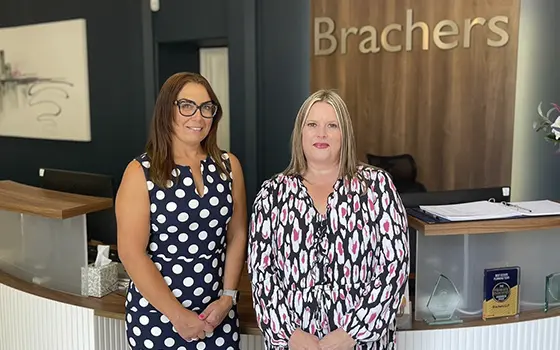
Senior Associate in our Employment team, Lisa Rothon is joined by, Cheryl Rothon a Clinical Nurse Specialist in menopause and primary ovarian insufficiency (POI).
Join us as we discuss the physical and emotional challenges that employees may face during this time and the crucial role employers can play in providing support. We cover practical strategies for creating a more inclusive and understanding work environment along with the legal obligations that employers need to fulfil.
Listen to the podcast in full below:
Podcast summary
October is recognized as Menopause Awareness Month, making it an ideal time to raise awareness and open conversations about this topic. The podcast emphasizes the need for ongoing support for women experiencing menopause, especially as many will spend a significant portion of their lives in this stage while balancing work and family responsibilities.
Key points discussed include:
Understanding menopause: The episode breaks down the stages of menopause—perimenopause, menopause, and post-menopause and discusses the most common symptoms which can significantly affect both personal and professional lives.
Employer responsibility: The hosts stress the importance of employers recognizing the challenges faced by their female employees and fostering an environment where they feel comfortable discussing their needs.
Lack of support: Many women report feeling unsupported in the workplace, often due to a lack of understanding from colleagues, particularly in male-dominated environments. Many women experience symptoms that can lead to performance issues at work, which may result in employers mistakenly placing them on performance improvement plans instead of offering necessary support.
Practical support strategies: The hosts suggest several practical measures employers can implement.
Dedicated policies and resources: Establishing a menopause policy can clarify the employer’s approach and provide staff with information on available support. Having a designated menopause champion can also help employees feel more comfortable discussing their needs.
Awareness and training: The importance of educating all staff, including management, about menopause is emphasized. This training can foster a more supportive environment and help everyone understand the challenges faced by their colleagues.
Legal obligations: Employers have a legal responsibility under the Health and Safety Act 1974 to support their staff, highlighting the need for proactive measures in the workplace.
Further support
If you require any further guidance or support on the issues covered in this podcast, please get in touch with our Employment team today.
Disclaimer: The content of the podcast is for guidance purposes only and does not constitute legal advice. Information correct at time of recording and is based on UK law. The views and opinions expressed in this podcast are those of the individual speakers and do not necessarily reflect the official policy or position of Brachers.
-
-
Welcome to the With You All the Way podcast, brought to you by Brachers. Providing legal support to families and businesses since 1895.
In today’s podcast, we are talking about menopause. I will be providing a bit of bite size overview as to what employers can be doing to support their staff during this time. My name is Lisa Rothon, and I’m a senior associate in the employment team here at brachers, and today I’m joined by Cheryl Rothon. She is a clinical nurse specialist in menopause and POI also known as my mum.
I think October, as some of you may be aware, marks Menopause Awareness Month. So this is a dedicated time to raise awareness around the menopause. Open up the conversation on the topic of menopause. And really that’s the purpose of our podcast today. As labour have pledged in their 100 day pledge recently, they are looking to create more protection, for women going through menopause and actually just providing more support for them in the workplace.
So it is really a topic that we need to be talking about and focusing on. And employers specifically need to be focusing on this kind of year round. And I think a good starting point, if you agree, for us to really understand why this topic needs the focus and attention that it needs is really to have an understanding of what the menopause is.
Yeah, quite agree. If I give you the the normal definition, it’s the time of life when a woman’s ovaries will stop producing hormones. And her monthly menstrual cycle ceases. We can pretty much divide it into three stages. So perimenopause is the lead up to menopause. And this is when the hormones are beginning to decrease in amount.
Menopause itself literally just means the last mental menstrual bleed. And then you are post-menopausal once you have been 12 consecutive months free of a period. So actually there are further stages beyond just the menopause, which is kind of the terminology we tend to refer to. So when does that happen. When when can those stages occur. So if we say that menopause it’s a normal part of the aging process.
And it just marks the end of a woman’s fertile years. The average age is 50/51. And that has stayed the same, regardless of the fact that women are now living much longer than they previously did, and back in the day very often didn’t make the age of the menopause, because their, you know, their life expectancy was so much shorter.
So we’ve now got more women, presumably in the workplace whilst going through the menopause. So why should employers then take an interest that obviously has an impact? You’ve got many more women in the workplace now. And it is a result of the increased lifespan. Many of these women will spend up to a third of their lives in a menopausal state, and during this time, they’re probably still caring for a family, whether that be their own children, grandchildren, even aging parents.
And and they’re still working because the pension age continues to rise. So they are going to be expected to work much longer. So they’re now balancing really, they’re now balancing family support as well as their own health journey. So how would you explain how does it affect women? How does the stages of the menopause affect women? Well, the symptoms can be far ranging.
And these symptoms generally occur up to or can occur up to ten years before the event itself. Yeah. And they’re far more reaching than the, hot flushes and night sweats that are generally spoken about. Yeah, I think that that’s, that’s the symptom we all tend to focus on is one that’s, that’s mentioned when somebody is going through with men very much.
But I think to understand how it can affect a woman, you have to be aware of the fact that we have, as women, estrogen receptor cells all over the body. There’s not just in the reproductive area. And all of these receptors are reliant on estrogen in order to maintain full functionality and to remain healthy. And what happens is that obviously the hormone production lessens, right?
Reduces, and therefore all of these receptor cells will be disadvantaged by not having that estrogen, so will react to the fact that there’s very little estrogen there. The array of symptoms that can be experienced is enormous. And the impact that that can have on a woman’s wellbeing. And both her work and home life is incredible. So are the symptoms the same for everybody?
No. There’s a whole range of symptoms. Some women will come into my clinic and tell me that they’ve got, I don’t know, 50 of the 72 symptoms that are listed or known, known about. Or they can look up, others will come in and we’ll just have a few. But the fact of the matter is that it’s impacting on their life and they need help.
And that is why we see them in our clinic. And it’s why, you know, women will try and get doctor’s appointments to get some sort of support with this. So what are some of the the common symptoms? I appreciate that, as you said, it affects everybody differently. But what are the more common symptoms for women going through menopause.
So the common ones we’ve already mentioned hot flushes and night sweats during the perimenopause or the lead up to that last period. A menstrual cycle, can become very irregular. Maybe a lot, heavier and longer in duration. You can experience things like a loss of libido, extreme fatigue and also sleeping issues and strangely enough, and women sometimes, although this is common and we see it as, you know, clinicians changes in the urinary tract.
So wanting to go to the toilet more, maybe even, you know, some incontinence. So they’re all very common symptoms. I mean, there are a whole load of others that can impact. And I think it’s worth mentioning, actually the mental ones, because I think this will have more of a bearing in the workplace. Yeah. So that they can experience anxiety and irritability and mood swings as well as depression.
But it’s brain fog, lack of concentration and an inability to recall words. They can be speaking to you and then they’ll forget what they’re trying to say. So you can see that that might impact in the workplace quite heavily. So I think based on even the symptoms that you’ve mentioned, it is evident how these can impact a woman going through the menopause at work.
I mean, I can only say to you from my experience, clinical experience, that I’ve had company directors, female company directors in the clinic, these, women that are used to working under pressure, they’re high fliers. And all of a sudden they’re finding it really difficult to cope, not just at work, but in their everyday lives. So, yeah, it has a huge impact.
And employers do need to take notice. Do they ever mention to you the types of support or if there’s any support at all at work? There’s very little. In my experience, you know, the, the women that I speak to find it very difficult, to speak about this at work because there isn’t the support there unless they talk to other female employees.
Unfortunately, lots of areas are male dominated, and it makes it very difficult and uncomfortable for them to address the issues that they’re experiencing, perhaps through through embarrassment, maybe, or talking to somebody of the opposite sex or most definitely. And I think unfortunately as well, it’s not just women that don’t understand all of the symptoms and understand fully what menopause is.
Men most certainly don’t, or very few. I’ll be kind. There are very few that will actually appreciate what a woman is going through, simply because we’re women and we are expected to cope and we do carry on and we don’t tend. Although we’ll talk to each other, we don’t tend to share that with partners. And perhaps, I suppose for a woman individually, this is a big change in their life.
It’s a big personal change and perhaps something, that they’re still trying to get to grips with before talking to anybody else about it. Most definitely. Yes. Yes, definitely. I think this is evident really, just based on the symptoms that you’ve mentioned, why women may well struggle at work when going through the menopause. And I’m aware just in my role that obviously it leads to absence some employers perhaps incorrectly take these individuals through kind of performance improvement plans without realizing the reason for these performance issues.
And actually, what employers need to be doing is really providing support for these individuals for their health and wellbeing to ensure that they kind of retain this workforce. So actually they’re at the time of their career. And really employers want to be retaining the skills and experience of these individuals. And they do that by feeling supported. That employer is also respond more positively.
They’re more productive if they feel supported at work as well as obviously the decreased cost in terms of absence, better retention rates, they’re not having to go out and kind of replace these individuals actually, that they’re keeping them in the workplace. I think it’s really important that you said that employers understand that and kind of retain the best skills and workforce that they can for that, for their business.
I think if we have a look, then, well, what what can employers be doing? I think there’s lots of kind of practical. You’ve mentioned there are physical and mental symptoms of the menopause. So there are practical changes and support that can be put in place by employers. I don’t know in terms of your patients, whether there’s things I suspect they probably mentioned to you that they’d like to see at work, but they don’t have in place.
But it could be as simple as looking at ways to cool the environment, I suspect. So, yeah. I think, you know, if we’re saying that flushes and sweat. So one of the common symptoms that most women will identify with whilst they’re going through the menopause, then yes, let’s you know, let’s provide funds. Yeah. So like a desk, a desk fan or something like that.
Water points, more widespread water points so women can access water. Yeah. When they’re feeling like this. Perhaps uniform as well in terms of uniform that will help women feel more comfortable. Particularly we’ve got kind of a nylon uniform most often. I mean, even in the medical profession, you know, when we’re wearing uniforms, what we don’t want is the kind of material.
So the polyester that makes that flushing and sweating ten times worse than it needs to be, it needs to be breathable material and then also providing enough uniform. Yes. So that, you know, you can allow them to change. It might be that they need to change more than once a day. You know, women will very often report and particularly at night they get this uncontrollable sweating.
And it absolutely drenches them. So more uniform perhaps in the rotation. They can have some in the wash if you’ve got some available would be helpful. And you mentioned about obviously the need to use the toilet. So allowing more regular rest breaks, access to toilets, time during the day for movement perhaps. Yes. Yeah. And I think another another one is obviously looking.
I’ve already said that it leads to a common one is sleep issues. So if you know that somebody has been up all night because they’ve got this in a bit, or they might get to sleep and then they wake up, then it’s impossible to go back to sleep. Maybe flexible, more flexible working hours. Yes. So I and I think that leads quite nicely on to.
So we’ve looked at some of the practical change that could be made. But one of the major changes that can be made. So I think absolutely allowing flexible working requests or looking at flexible working, whether that’s in terms of days worked or hours worked, would be a really great one for employers to look at that. I think in overall building kind of starting point for many employers.
What would be a dedicated menopause policy? Yes. Obviously it clarifies the approach that an employer will take to those going through the menopause. I think just having a policy in place as a starting point makes staff feel like businesses are taking notes. They are supporting their staff. It can obviously include in their avenues of where they can find support internally.
I don’t know whether any of your your patients where we mentioned perhaps having a dedicated menopause champion. So if, for example, an individual doesn’t feel comfortable going to HR, perhaps for whatever reason that may be, actually they know there’s somebody else. I think that’s a very good idea. I think it’s having information throughout the building that they’re working in.
So, you know, access to menopause leaflets and there are lots of, places that information, correct information can be found. But if you’ve got somebody that is particularly interested in supporting women in this way, then yes, I mean, there are courses that they can attend short courses. That just gives them a better overview of what’s going on and how they can help.
So I think that supports women. Yeah. Not only are they somebody to talk to, but they can also then signpost exactly individuals to other areas where they can get support. You can also do that quite simply, or employers can do that quite simply through posters like you said, leaflets in staff rooms, toilets in in both the men and women’s toilets.
So everybody can go off and get this information. For many, when they will have somebody in their life that is going through the menopause, whether it’s a sister, wife, partner. Exactly. And I think that’s why it’s really important that men are made aware, and, you know, can understand what’s happening because as you quite rightly say, they are all going to have a female in their life that is going to go through this.
All women are going to go through this. It’s so important. So yes, I think it’s important to have it where, you know, whether that be in the male toilets or the male bathrooms, as well as it’s not this is not just about women. No. Absolutely. Is it important for everybody to understand for for everybody to feel supported and, and really open up that conversation?
It may be as well employers can run, kind of groups or lunchtime groups or after work groups that people can go along to share experiences that that might make them feel more comfortable talking about their own circumstances at work, and again, kind of get some support and advice on where they could be talking to others or getting further support from.
I think it’s also important for employers they’re required to do return to work interviews anyway, but if they return to work, interview would hopefully also help kind of open up that conversation around what the individual is going through, what the employer can be doing to support them. So I think it’s probably an important point to make. The like you said, everybody’s symptoms are different and it’s not a one size fits all.
You know, most definitely work in terms of support. It’s really important that employers are talking to individuals and exploring what they can be doing for them, as individually as well as things. As we said, kind of cooling temperatures, access to toilets and drinking water that would be applicable across the board to everybody. And I think lastly, what’s important as always, training, training for managers so they feel comfortable having the conversation with their staff, but also training for staff so they understand what colleagues are going through, what they themselves are going through.
You’ve mentioned actually lots of women don’t necessarily understand or appreciate, what what the menopause may well bring. And so I think training for staff on the policy and generally around menopause would be really useful. I think it is important that we also do mention legal obligations on employers for supporting that staff. So under the Health and Safety Act 1974, employers have an obligation to ensure the health, safety and welfare of their staff work.
This does involve doing risk assessments for their staff and women are also protected, as are all employees. Under the Equality Act 2010. Menopause in itself isn’t a protected characteristic that you’ve those symptoms that we’ve mentioned and that they go into it. You, do meet the criteria under the Equality Act to be classified as a disability. They may well have a disability discrimination claim if they’re not supported or they feel they’re being treated less favorably because of the menopause or their menopausal symptoms, or having time off due to those symptoms.
And actually, what is really important to know is that if menopause for any individual is classified as a disability, an employer has a legal obligation to make reasonable adjustments. As we’ve mentioned, we would hope that employers are looking to make adjustments anyway, but it’s important they’re aware of their legal obligations because unfortunately, if these aren’t fulfilled, then they may well find themselves in litigious circumstances.
I think if there are any employers that would like some support or have a conversation around what they can that they can put in place for their staff and prices obviously can provide that assistance. We would be very happy to have that conversation and give some direction, even if it’s just a starting point. At least taking the first step, it’s a big step and it will mean a lot for staff.
It’s been great having you along today. Hopefully it’s been useful for everybody listening, as I said, just to get an overview, a quick snapshot of what the menopause is and what we really need to be looking at now and in the future. As I mentioned at the start, labour are also focusing on this, and they have mentioned in their recent proposals that women’s equality really is at the heart of their mission.
It is part of their make work pay plan to transform the lives of working women. And it does include strengthening protection from menopause, discrimination and harassment. And I think now is the time for everybody to take note and get on board with with getting this support in place. Thank you for listening.
-
This content is correct at time of publication
Can we help?
Take a look at our Employment & HR page for useful information, resources, guidance, details of our team and how we may be able to help you
-
-
Key contact:
Get in touch
Please fill out the below form or alternatively you can call us on 01622 690691

-

Autumn Budget update for schools
Read More -

The Employment Rights Bill
Read More -

Brachers achieves prestigious rankings in Chambers UK Guide 2025
Read More -
Brachers achieves top rankings in Legal 500 UK 2025 Guide
Read More -
Brachers bolsters private client team with new tax and trusts specialist
Read More
